Same-day diesel diagnostics
· Priority fleet service
Same-day diesel diagnostics
· Priority fleet service Call us:
610-419-1247
Call us:
610-419-1247 Message us:
info@innovativetruckservices.com
Message us:
info@innovativetruckservices.com

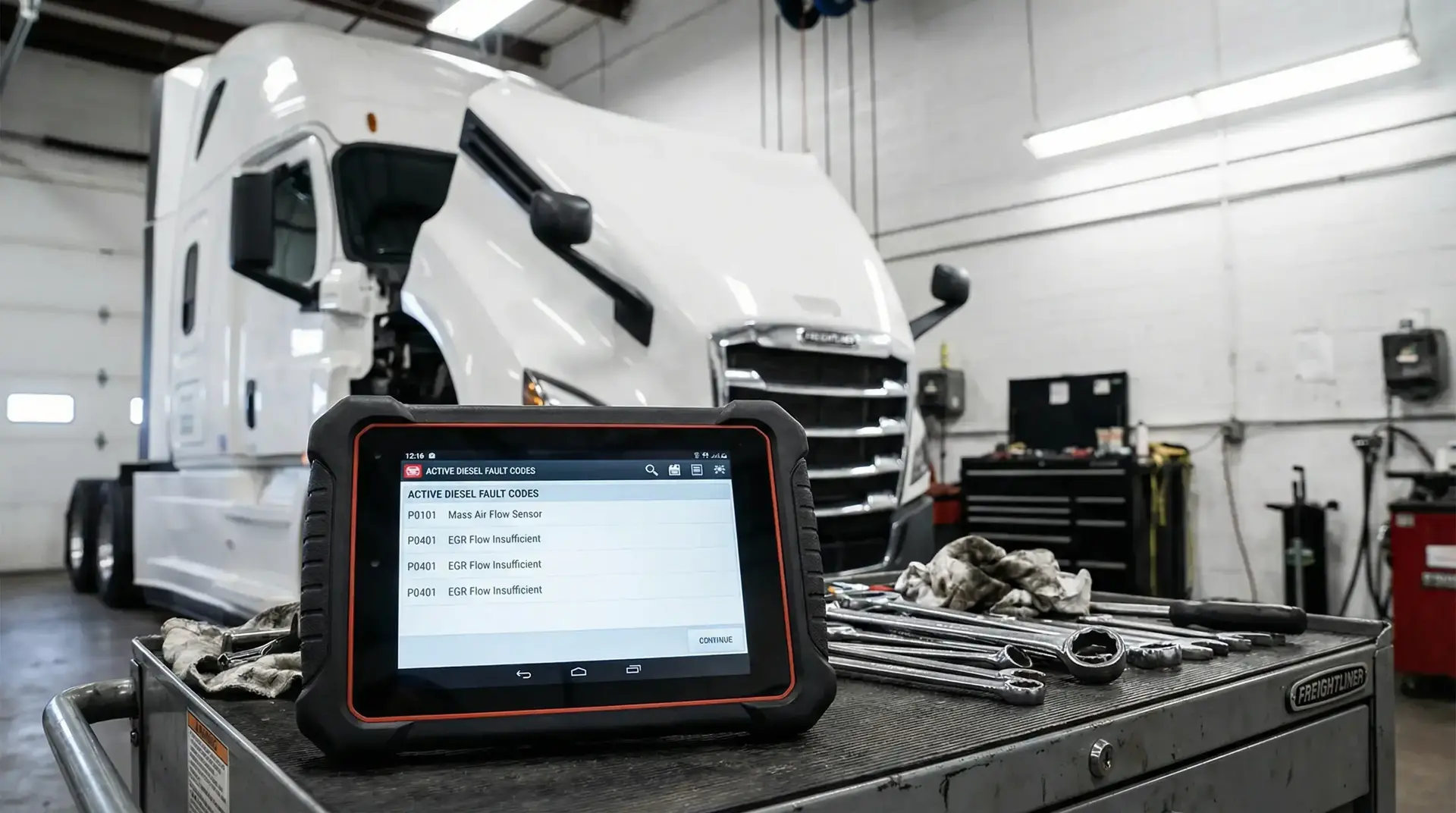
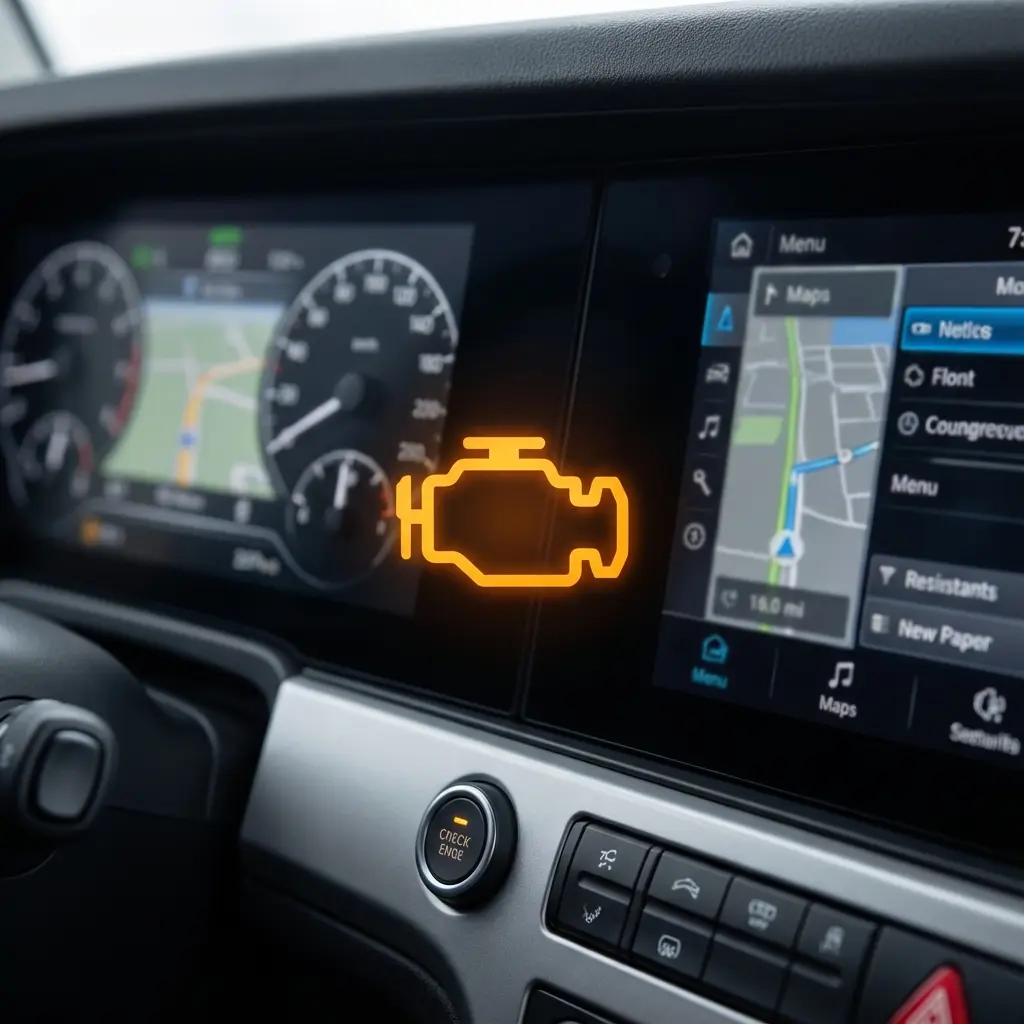
Few things cause more anxiety for truck drivers than watching that amber check engine light illuminate on the dashboard. Your mind races: Is it serious? Can I keep driving? How much is this going to cost? As diesel technicians who see these situations daily at our Allentown shop, we can tell you that knowledge is the best antidote to panic. Understanding what that light means - and what those fault codes are actually telling you - can help you make smart decisions and avoid unnecessary stress.
Don't Panic: What the Check Engine Light Actually Means
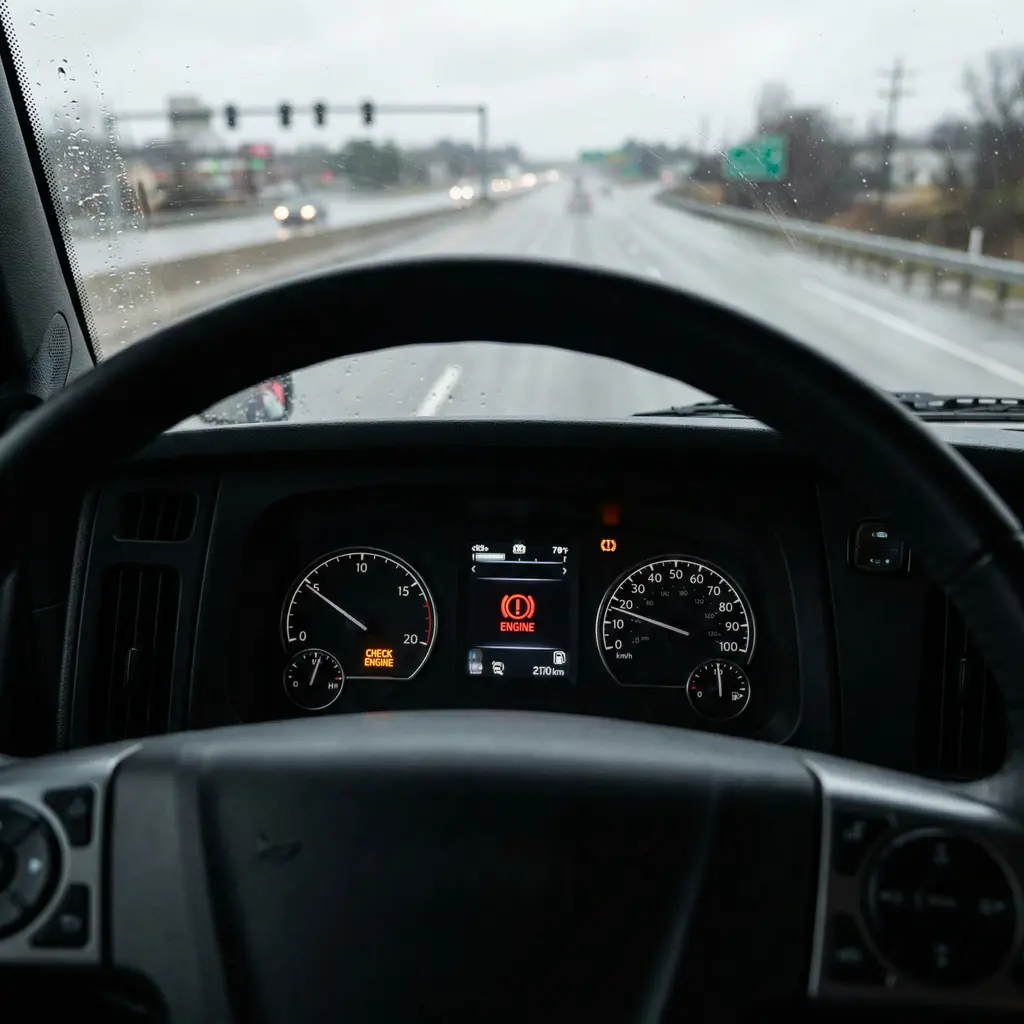
The check engine light (CEL), also called the malfunction indicator lamp (MIL), is your truck's way of telling you the engine control module (ECM) has detected something outside normal operating parameters. Modern diesel engines have dozens of sensors monitoring everything from exhaust temperature to fuel rail pressure to turbo boost levels. When any reading falls outside the expected range, the ECM logs a diagnostic trouble code (DTC) and turns on the light.
Here's what most drivers don't realize: the check engine light doesn't mean "stop immediately" in most cases. It means "something needs attention." The severity varies enormously - from a loose fuel cap to a failing injector to a serious emissions system malfunction.
The key is understanding the difference between:
- Steady amber light - An issue exists that needs diagnosis, but immediate danger is unlikely
- Flashing amber light - A more urgent condition that could cause damage if ignored
- Red warning lights - These indicate serious problems requiring immediate attention (oil pressure, coolant temperature, etc.)
When your CEL comes on steady, you generally have time to drive to a shop. When it's flashing, reduce speed and load, and get diagnosed as soon as possible.
Common Diesel Fault Code Categories
Diesel trucks use standardized fault code formats, though different manufacturers may have additional proprietary codes. Understanding the categories helps you gauge what system is affected:
Engine and Fuel System Codes (P0xxx - P1xxx)
These codes relate to fuel delivery, combustion, and engine timing. Examples include fuel rail pressure problems, injector circuit faults, and timing sensor issues. These can range from minor (sensor glitch) to serious (failing injector).
Aftertreatment System Codes (P2xxx - P24xx)
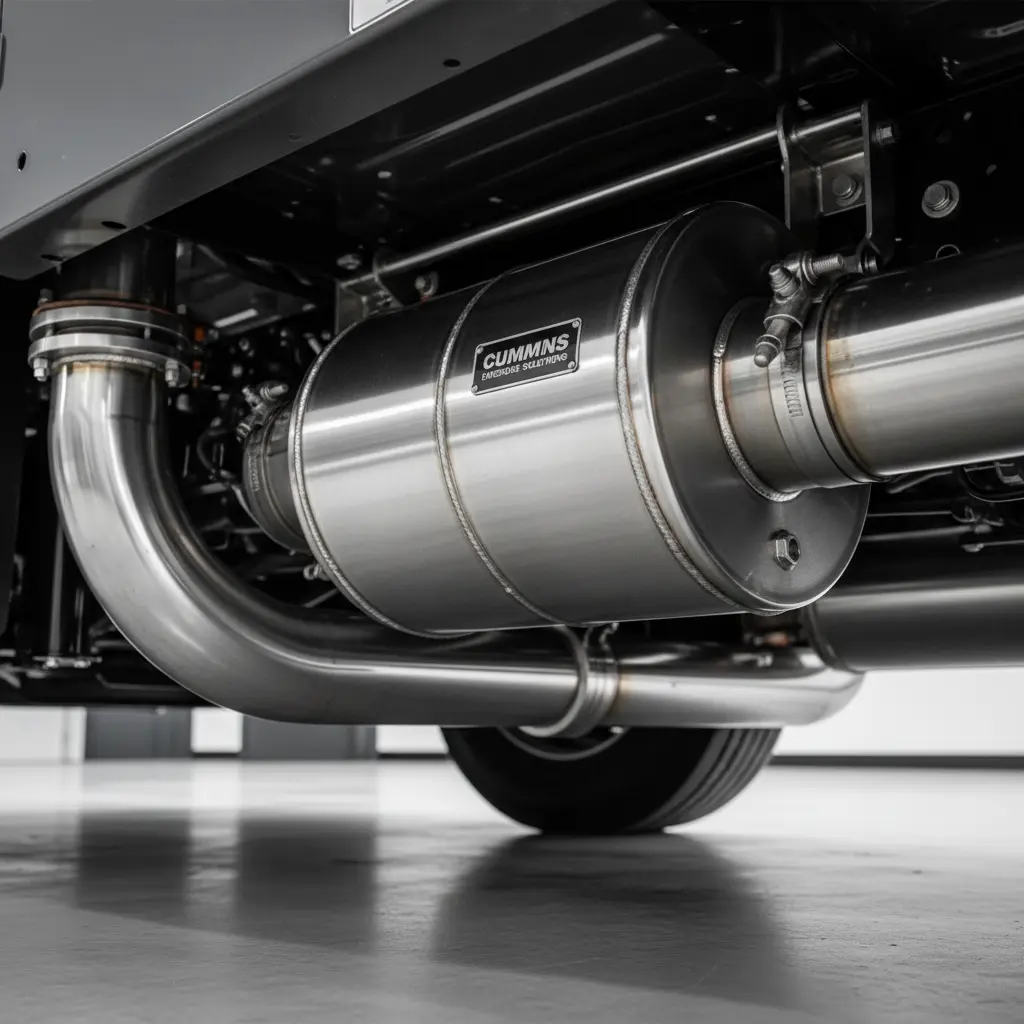
Modern diesel trucks have complex emissions systems including the DPF (diesel particulate filter), DOC (diesel oxidation catalyst), DEF/SCR (selective catalytic reduction), and EGR (exhaust gas recirculation). These systems generate the most common fault codes we see in our shop. For a deep dive on DPF issues specifically, see our DPF maintenance and regeneration guide.
Transmission Codes (P07xx - P09xx)
Automatic and automated manual transmissions like the Volvo I-Shift have their own sensor networks. Shift solenoid problems, speed sensor faults, and clutch actuator issues fall into this category. Our I-Shift diagnostic guide covers common transmission codes.
Electrical and Communication Codes (U0xxx)
These indicate problems with the vehicle's communication network - modules that can't talk to each other, sensors with wiring faults, or ECM issues. These require careful diagnosis because the code often points to a symptom rather than the root cause.
Top 5 Fault Codes We See at Our Allentown Shop
After years of working on commercial diesel trucks, certain codes appear far more often than others. Here are the top five we diagnose regularly:
-
DEF Quality / SCR Efficiency Codes
Codes like P20EE (SCR NOx Catalyst Efficiency Below Threshold) and P208E (DEF Quality Performance) are extremely common. These usually indicate the DEF (diesel exhaust fluid) needs attention - either the DEF is contaminated, the DEF tank heater has failed, or the injector is clogged. Left unaddressed, these can trigger engine derating.
-
DPF Regeneration Codes
P2463 (Diesel Particulate Filter - Soot Accumulation) and related codes mean your DPF is clogged beyond the point of passive regeneration. This often happens with trucks doing lots of stop-and-go or idle time. You may need a forced regeneration or, in severe cases, a DPF cleaning or replacement.
-
EGR System Codes
P0401 (EGR Flow Insufficient) and P0402 (EGR Flow Excessive) are common on high-mileage trucks. Carbon buildup, sticking valves, and faulty sensors can all trigger these. EGR problems affect fuel economy and emissions performance.
-
Boost Pressure Codes
P0299 (Turbo/Supercharger Underboost) often indicates a boost leak, wastegate problem, or turbo beginning to fail. This affects power output and fuel efficiency. Catching it early can prevent expensive turbo replacement.
-
Fuel Pressure Codes
P0087 (Fuel Rail Pressure Too Low) and P0088 (Fuel Rail Pressure Too High) point to fuel system problems - worn high-pressure pump, failing injectors, or fuel filter restriction. These require prompt attention to prevent engine damage.
When You Can Keep Driving vs. When to Stop Immediately
Knowing when to push through and when to pull over can save your engine - or your life. Here's our guidance based on years of experience:
Usually Safe to Continue Driving (to a shop):
- Steady (non-flashing) check engine light
- No noticeable change in engine performance
- No unusual sounds, smells, or smoke
- All other gauges reading normal
- DEF-related codes (unless in active derate)
- Minor sensor codes (MAF, MAP, ambient temp)
Reduce Speed and Get Diagnosed ASAP:
- Flashing check engine light
- Noticeable power loss
- Rough idle or misfires
- Turbo-related codes
- Fuel system codes
- Any derate warning
Stop Driving Immediately:
- Red oil pressure warning
- Red coolant temperature warning
- Visible smoke from engine compartment
- Loud knocking or grinding sounds
- Complete power loss
- Burning smell
If you need to stop, call our 24/7 mobile roadside service at 484-477-8251 and we'll come to you.
Why Diesel Diagnostics Requires Specialized Equipment
That generic OBD-II scanner you can buy at an auto parts store? It's not enough for commercial diesel trucks. Here's why professional diagnostics matter:
Generic Scanners Show Only Part of the Picture
A basic scanner might read the P-code that triggered your CEL, but it won't show you the freeze frame data (the conditions when the fault occurred), pending codes (problems developing but not yet triggering the light), or manufacturer-specific codes that reveal the real issue.
Commercial Trucks Have Multiple Modules
Your truck isn't just one computer - it's a network. The engine ECM, transmission control module, aftertreatment control module, ABS module, instrument cluster, and body controller all communicate. A problem in one system can set codes in another. Professional diagnostic software can scan all modules and see the complete picture.
OEM-Level Software Unlocks Advanced Functions
At our shop, we use factory-level diagnostic tools for all major makes - Freightliner, Peterbilt, Kenworth, Volvo, Mack, International, and Western Star. This lets us not just read codes but also view live data streams, perform actuator tests, initiate forced regenerations, calibrate sensors, and access technical service bulletins for known issues.
Experience Matters More Than Tools
The real value isn't just the scanner - it's the technician interpreting the data. A code is a symptom, not a diagnosis. P0087 (fuel pressure low) could mean a bad pump, clogged filter, cracked line, failing injector, or even an electrical problem with the pressure sensor. Experience helps us find the root cause quickly, saving you time and money on unnecessary parts.
What to Expect During a Diagnostic Appointment
When you bring your truck to Innovative Truck Services for diagnostics, here's our process:
Step 1: Initial Assessment
We'll ask about the symptoms you've noticed, when the light came on, and any recent changes (fuel, DEF, service work). This context helps us understand what we're looking for.
Step 2: Full System Scan
We connect our diagnostic equipment and scan all modules for active codes, pending codes, and stored history. We capture freeze frame data to see the exact conditions when faults occurred.
Step 3: Live Data Analysis
We monitor sensor readings in real-time, comparing them to specifications. This often reveals problems that haven't yet triggered codes - a sensor drifting out of range, a component operating at its limits.
Step 4: Component Testing
Based on our findings, we may perform specific tests - actuator tests, pressure tests, electrical checks - to confirm our diagnosis before recommending repairs.
Step 5: Clear Explanation and Estimate
We explain what we found in plain language, what needs repair, and provide an upfront estimate. No surprises, no pressure - just honest information so you can make an informed decision.
Learn more about our comprehensive engine diagnostics service.
Schedule Your Diagnostic Check
A check engine light doesn't have to derail your day. Understanding what it means - and having a trusted shop to diagnose it - gives you control over the situation. At Innovative Truck Services, we've invested in the training and equipment to diagnose any commercial diesel quickly and accurately.
Why Choose Us for Diagnostics:
- Factory-level diagnostic tools for all major truck brands
- Same-day diagnostic appointments available
- Clear explanations - no confusing tech-speak
- Honest assessments - we tell you what's actually wrong
- Upfront pricing - know the cost before we start repairs
- Convenient Allentown location serving the Lehigh Valley
Call 610-419-1247 to schedule a diagnostic appointment, or book online. Located at 2340 Schoenersville Rd in Allentown, we serve owner-operators and fleets throughout eastern Pennsylvania.
Don't ignore that light - and don't panic either. Let's figure out what's going on and get you back on the road with confidence.